
Could the U.S. Bring Back a Military Draft for the War with Iran?

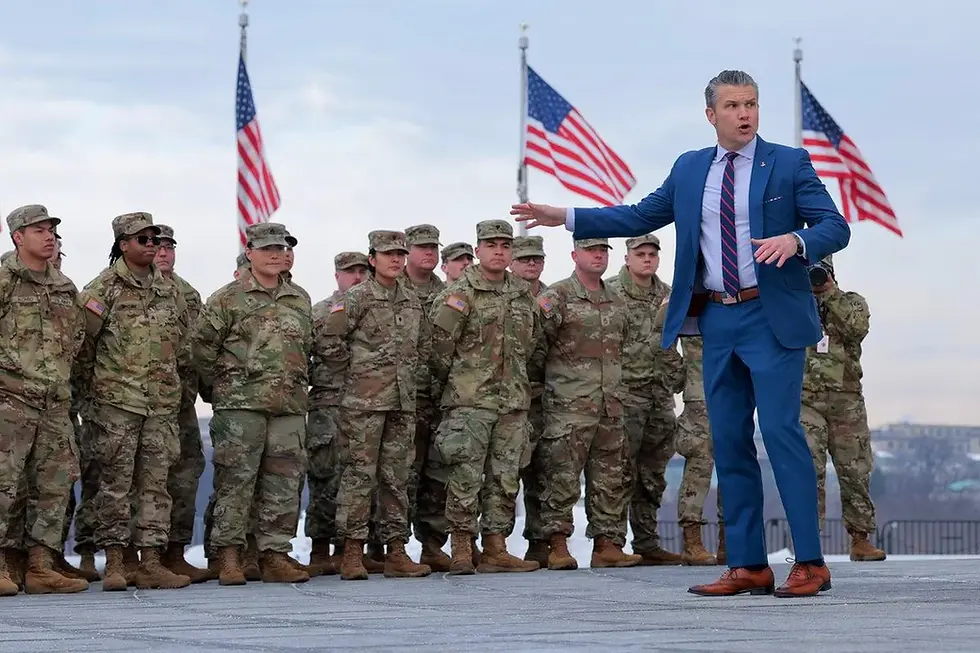
As the conflict with Iran escalates, questions about whether the United States could reinstate a military draft are resurfacing. While the idea remains deeply unpopular with the public, recent comments from the Trump administration have renewed concerns about the possibility.
Administration declines to rule out future options
Officials in President Donald Trump’s administration have not ruled out sending U.S. troops into Iran, even as the military campaign has so far relied primarily on air power.
During an appearance on Sunday Morning Futures, White House press secretary Karoline Leavitt was asked about concerns that a ground war could lead to a draft.
Host Maria Bartiromo said many parents are worried “that they’re going to see their sons and daughters get involved in this.”
Leavitt did not dismiss the idea outright.
“President Trump wisely does not remove options off of the table,” she said. “The president as commander in chief wants to continue to assess the success of this military operation. It’s not part of the current plan right now, but again the president wisely keeps his options on the table.”
When asked later whether the administration was considering reinstating a draft, the White House referred reporters back to Leavitt’s remarks.
Defense Secretary Pete Hegseth also declined to rule out broader military steps. In an interview with CBS 60 Minutes, he said it would be unwise to publicly outline the limits of U.S. military strategy.
“You don’t tell the enemy, you don’t tell the press, you don’t tell anybody what your limits would be on an operation,” he said.
Veterans groups warn against escalation
Some advocacy organizations representing service members and veterans have criticized the administration’s approach to the conflict.
Naveed Shah, political director of the veterans advocacy group Common Defense, warned that failing to rule out a draft could alarm military families.
“Refusing to rule out boots on the ground, let alone a draft, sends a chilling message to service members and their families,” Shah said, arguing that such signals suggest their “lives and futures are bargaining chips in an open-ended conflict.”
Shah also pointed to past wars where limited interventions expanded into long-term military commitments.
“We’ve seen this playbook before, in Iraq, Afghanistan, and elsewhere,” he said.
Trump’s past claims about the draft
During the 2024 campaign, Trump repeatedly accused Democrats of planning to bring back the draft. At several rallies, he falsely claimed that his opponents wanted to conscript Americans into military service.
Speaking in Las Vegas in September 2024, Trump alleged that Kamala Harris supported reinstating the draft.
“She wants to bring back the draft, and draft your child, and put them in a war that should never have happened,” he said.
Similar claims circulated online about Project 2025, a policy blueprint from the Heritage Foundation associated with Trump allies. Viral posts claimed the plan proposed requiring high school seniors to serve two years in the military, but that proposal does not appear in the document.
Although some figures aligned with Trump have previously discussed forms of mandatory national service, no formal proposal has been introduced.
How the military draft system works
The United States maintains the infrastructure for a draft through the Selective Service System, an independent agency that keeps records of people who could be eligible for military service if conscription is authorized.
The system exists so that, if approved by both Congress and the president, the government could quickly mobilize personnel in a national emergency.
Conscription has been used in several major conflicts, including the Civil War, World War I, World War II, the Korean War and the Vietnam War. The Vietnam War was the last time Americans were drafted, with roughly 1.8 million men called to service.
The U.S. military switched to an all-volunteer force in 1973.
Even so, federal law still requires most men between ages 18 and 25 to register with the Selective Service System.
Can a president reinstate the draft?
A president cannot bring back the draft alone.
The U.S. Constitution gives Congress the authority to “raise and support Armies,” meaning lawmakers would need to amend the Military Selective Service Act to authorize conscription.
Given the deep political divisions in Congress and the public’s opposition to reinstating the draft, such legislation would face steep obstacles.
Polling from the Pew Research Center shows roughly three-quarters of Americans oppose bringing back the draft.
What would happen if a draft were implemented?
If Congress authorized conscription, the Selective Service System would likely use a lottery similar to the one used during the Vietnam War.
Numbers would be drawn corresponding to birthdates to determine the order in which people are called up. Men turning 20 during the year of the draft would likely be among the first selected.
As each year passes, draft-eligible men move down the priority list until they reach age 26, which is the upper limit for conscription under current law.
The agency says a modern lottery would create “the most fair draft in history.”
Registration requirements and penalties
Most men between 18 and 25 must register with Selective Service. In many states, this happens automatically when applying for or renewing a driver’s license.
More than 15 million men are currently registered.
Failing to register is technically a felony, though prosecutions are rare. However, individuals who do not register may face restrictions when applying for federal benefits or government employment.
Possible exemptions and deferments
Even if drafted, some individuals could qualify for deferments or exemptions.
Students can delay service until the end of a semester or academic year. Others may qualify for deferments due to medical conditions, family circumstances or conscientious objection to military service.
During the Vietnam War, more than half of the roughly 27 million eligible men were ultimately exempt, deferred or disqualified from service.
Those who refuse to comply with a draft order could face serious penalties. During the Vietnam era, about 570,000 people avoided service, and more than 200,000 were charged with violating draft laws.
Only a small fraction ultimately served prison sentences, and tens of thousands fled the country.
Are women included?
Under current law, women are not required to register with the Selective Service System.
Congress has debated expanding the requirement to include women, and committees in both the House and Senate approved such a proposal in 2016. However, the measure was ultimately removed from the final defense bill and never became law.


